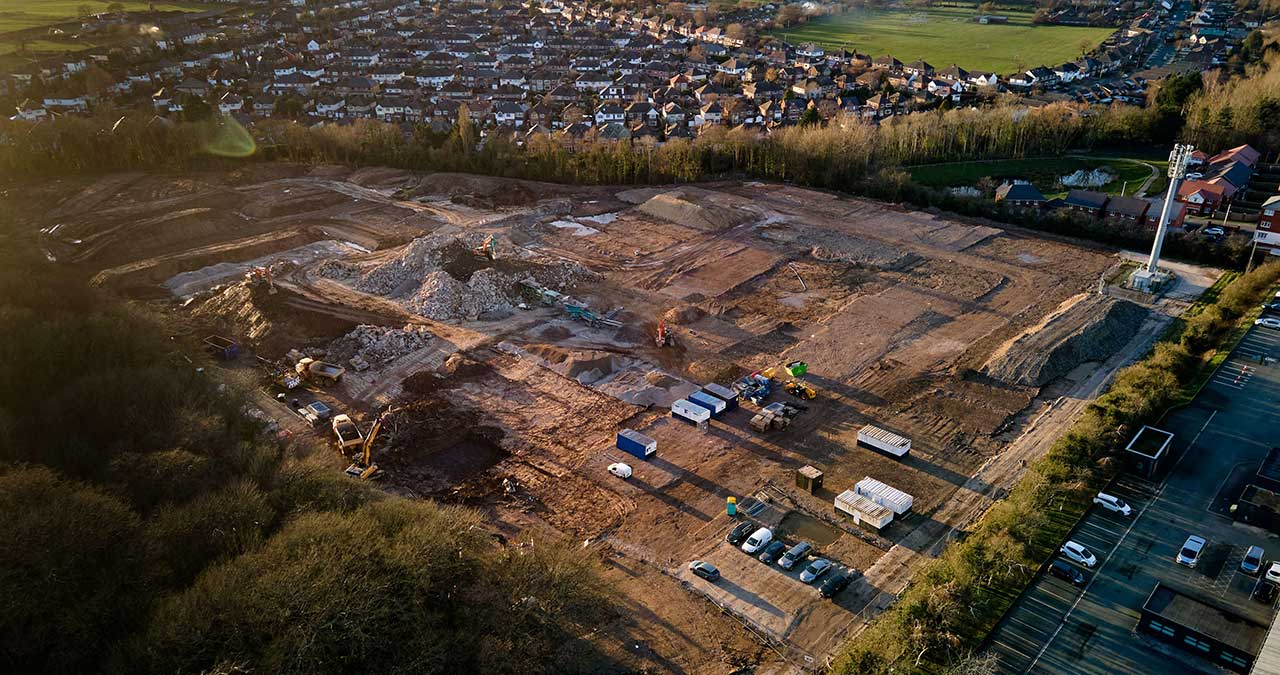

You may have heard of the term brownfield being used before, or maybe you haven’t. Either way, in this article we’re going to cover what it actually is and what we should be doing with it. But for now, let’s start with the what.
What is Brownfield, and how’s it different to greenfield?
Brownfield is ‘land which has previously been developed, usually commercially, but no longer used’. (According to the English definition). Simply put it’s land we’ve built stuff on but don’t use anymore (excluding farmland). For example, picture a disused factory or industrial park – that’s it. The definition varies around the world but it’s roughly the same meaning.
But what’s the difference? Well, Greenfield is land which hasn’t been previously built on. If you like, picture a lusheous meadow with trees and flowers. The names originated from the general connatations with the colour of the different types of land. – The idea that a pristine field completely undeveloped would be green whereas a developed industrial wasteland would hence be brown.
OK… But why should I care?
Believe it or not, brownfield actually matters. We need to be redeveloping on this land, so we can keep our greenfield spaces pristine and unharmed, leaving a haven for wildlife. Development on this type of land should be encouraged. The population is growing therefore we inevitably need more residential and commercial infrastructure. By doing this we can save nature and still progress in development.
However, we can’t always assume that brownfield is low on biodiversity. In fact sometimes these sites offer more than equivalent greenfield spaces, as they can simulate the conditions of certain ecosystems, such as a scrubby grassland. But generally speaking it’s considered better to preserve greenfield and build on the existing industrial sites.

How Much Value actually is there in this land?
To put it simply, a lot. The CPRE’s Register 2022 estimates that there’s capacity for around 1.2 milion homes across the UK, covering 23,000 sites with an area of just under 30,000 hectares. In total, this equates to housing for nearly 3 million people. It’s not a permanent solution but until we come up with another one, this is a great way to continue to preserve our countryside.
Why aren’t we building on these Brownfield sites?
This is where it gets a bit more complicated. Brownfield is usually land left as result of an ex-industrial site. Because of this, there are a few problems which make developers less inclined to develop it. Firstly, the buildings themselves. It can be costly for developers to demolish them, as many are ex-factories/warehouses. As a result, greenfield is a lot easier to build on and is a more popular choice. Secondly, cleaning up. Factories and warehouses can release harmful chemicals and debris, and cleaning projects can be very expensive.
But what can we do about it?
There are lots of solutions to this probem. Firstly, the government needs to be stepping in to help fund these projects, as they can prove costly (as seen above). This would also help in providing cheap and affordable housing for all, seeing as we are currently in the middle of a financial crisis. But you can help as well. Campaigning for these policies to go into place, writing to your MP, and raising awareness of the benefits are all ways in which you can help.
Article written by Henry Morris